The Tipping Point
Scope
Ideation, Concept, Design, Development
Year
2025
Industry
Furniture Design
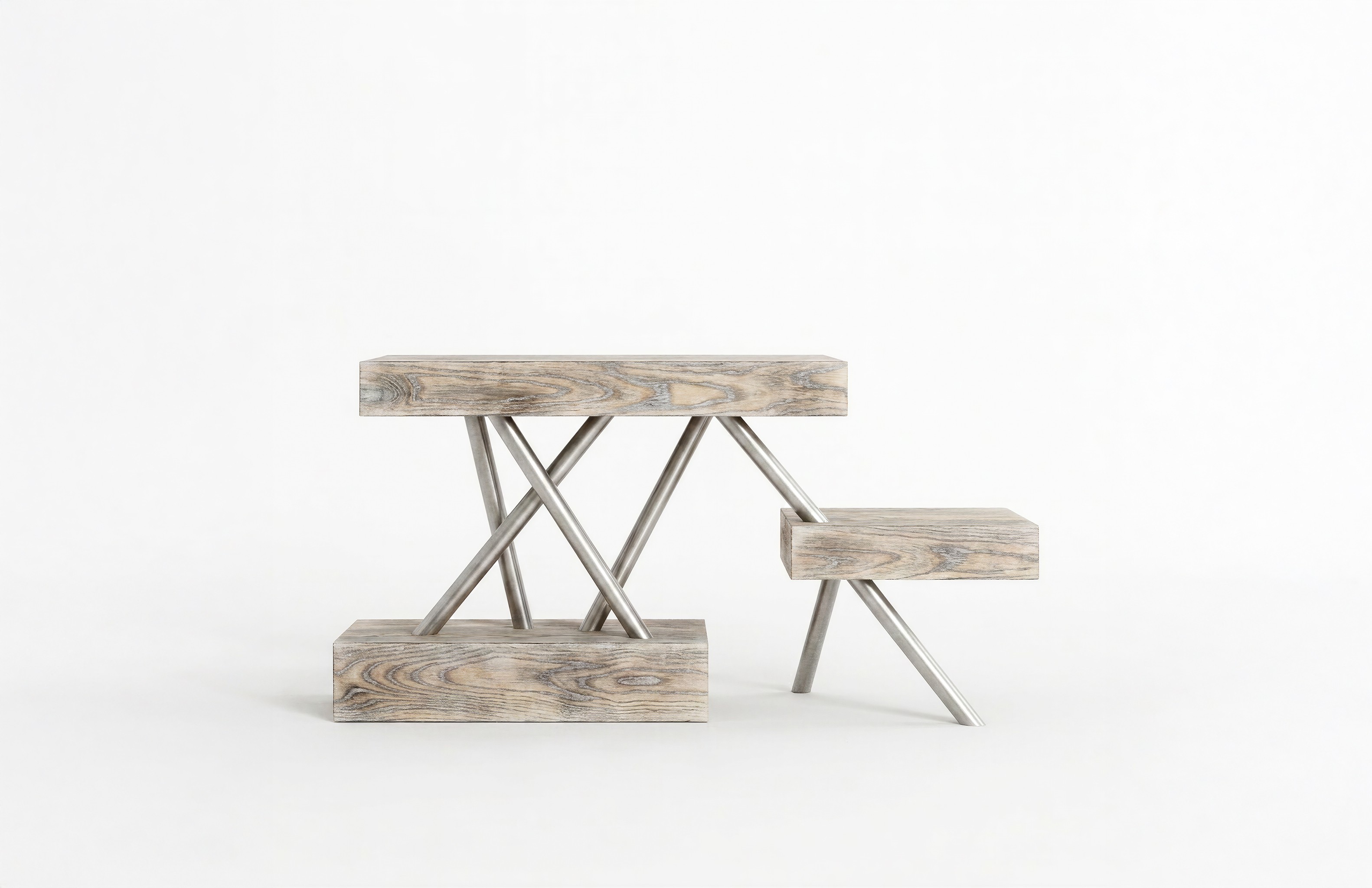
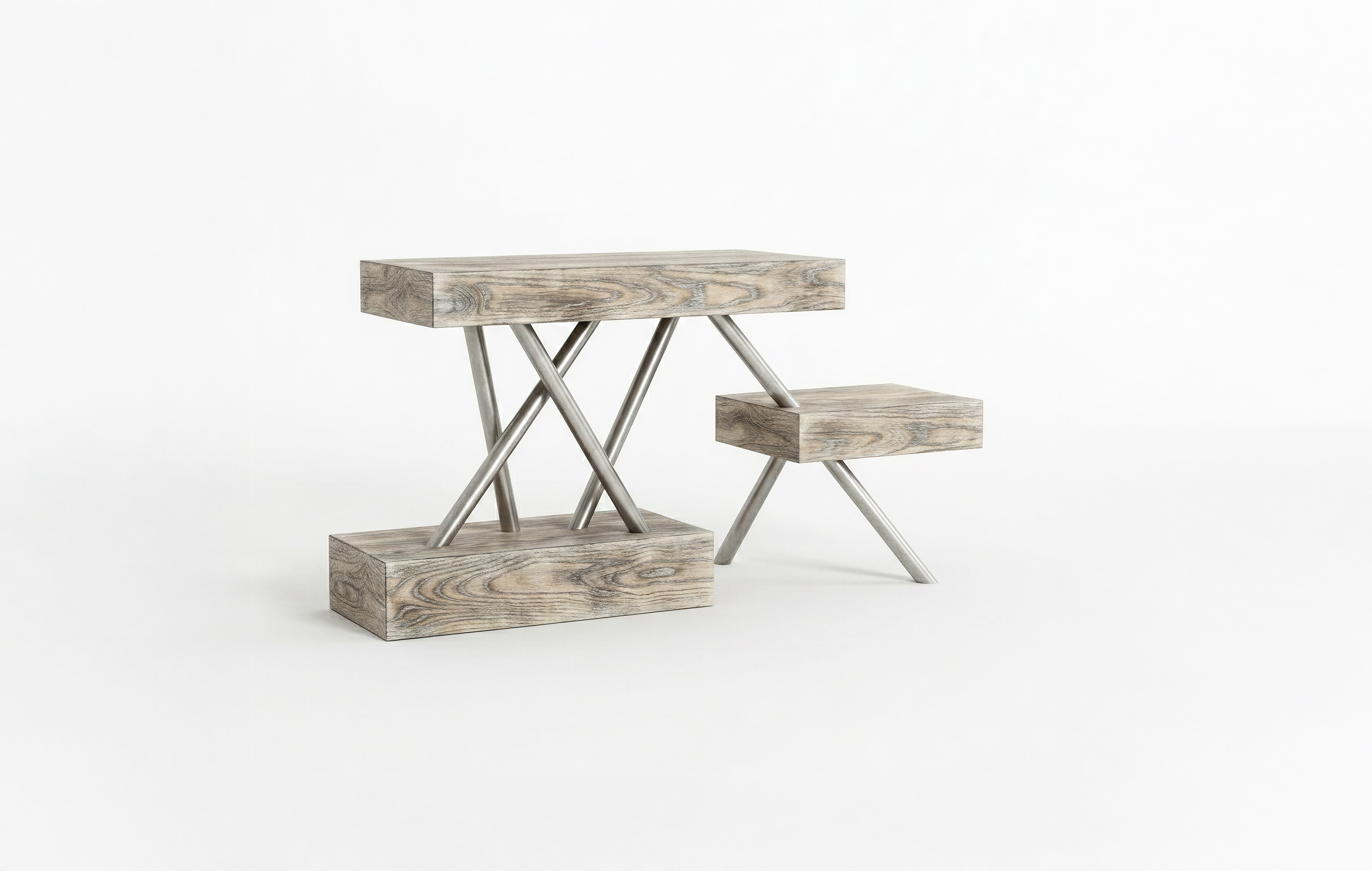
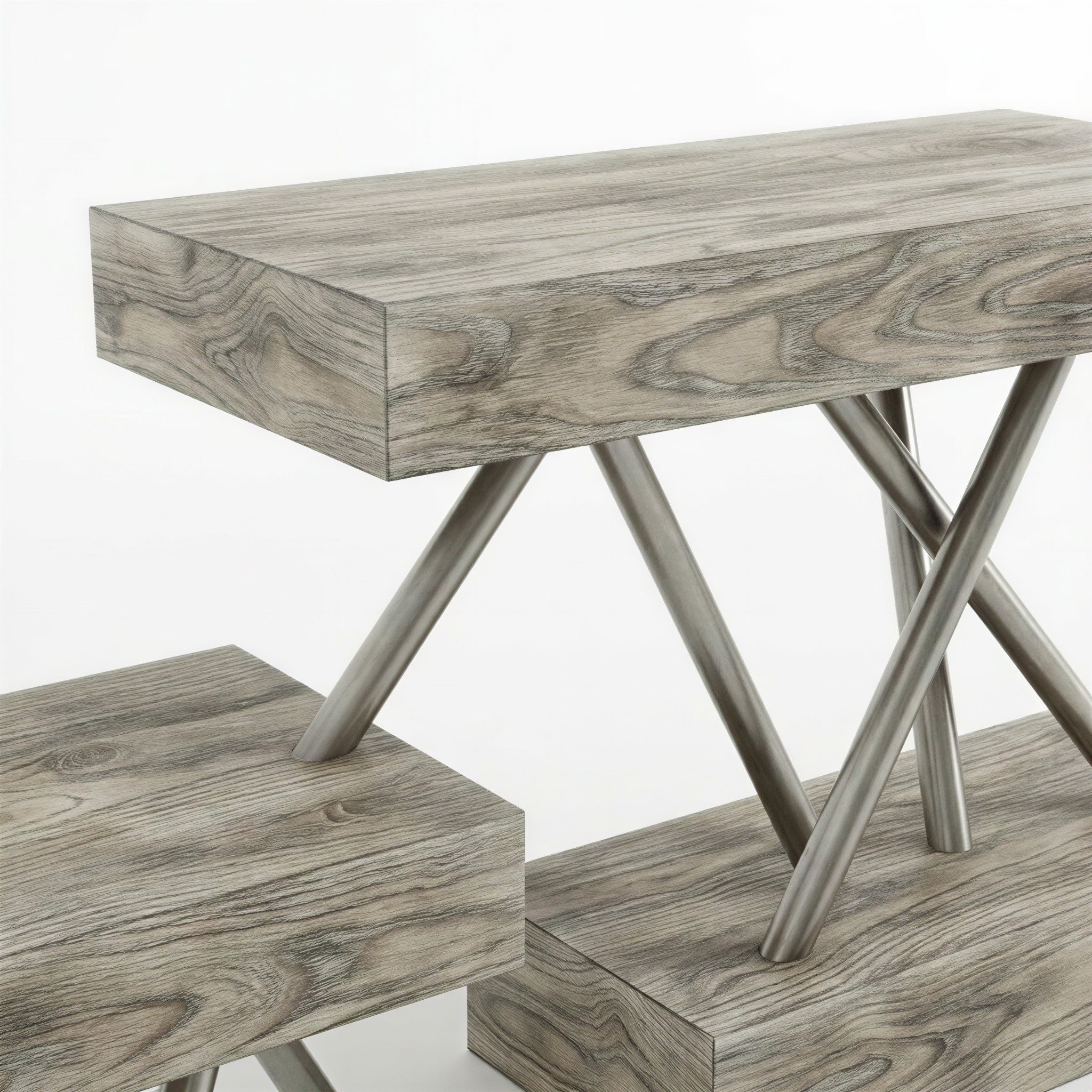
I built The Tipping Point by hand, working through models made from foam and sticks before arriving at the final form. Three walnut boxes rest on angled steel dowels, making the table look less stable than it is.
Context
I wanted to see how far I could push the familiar shape of a table. The starting question was simple: could it still work as a table if it looked like it might fall?
Approach
I started in my bedroom with books, rubber bands, toothpicks and even a taco shell. I was looking for ways to hold things above the ground. After weeks of making models from foam and sticks, I settled on three walnut boxes supported by angled 35 mm steel dowels. I built, tested and rebuilt the table by hand.
Outcome
People circled the table, crouched to look underneath and pushed it to test its balance. It stayed upright. That reaction was what I had been working towards: an object that makes people curious enough to investigate it.
The Tipping Point
Scope
Ideation, Concept, Design, Development
Year
2025
Industry
Furniture Design
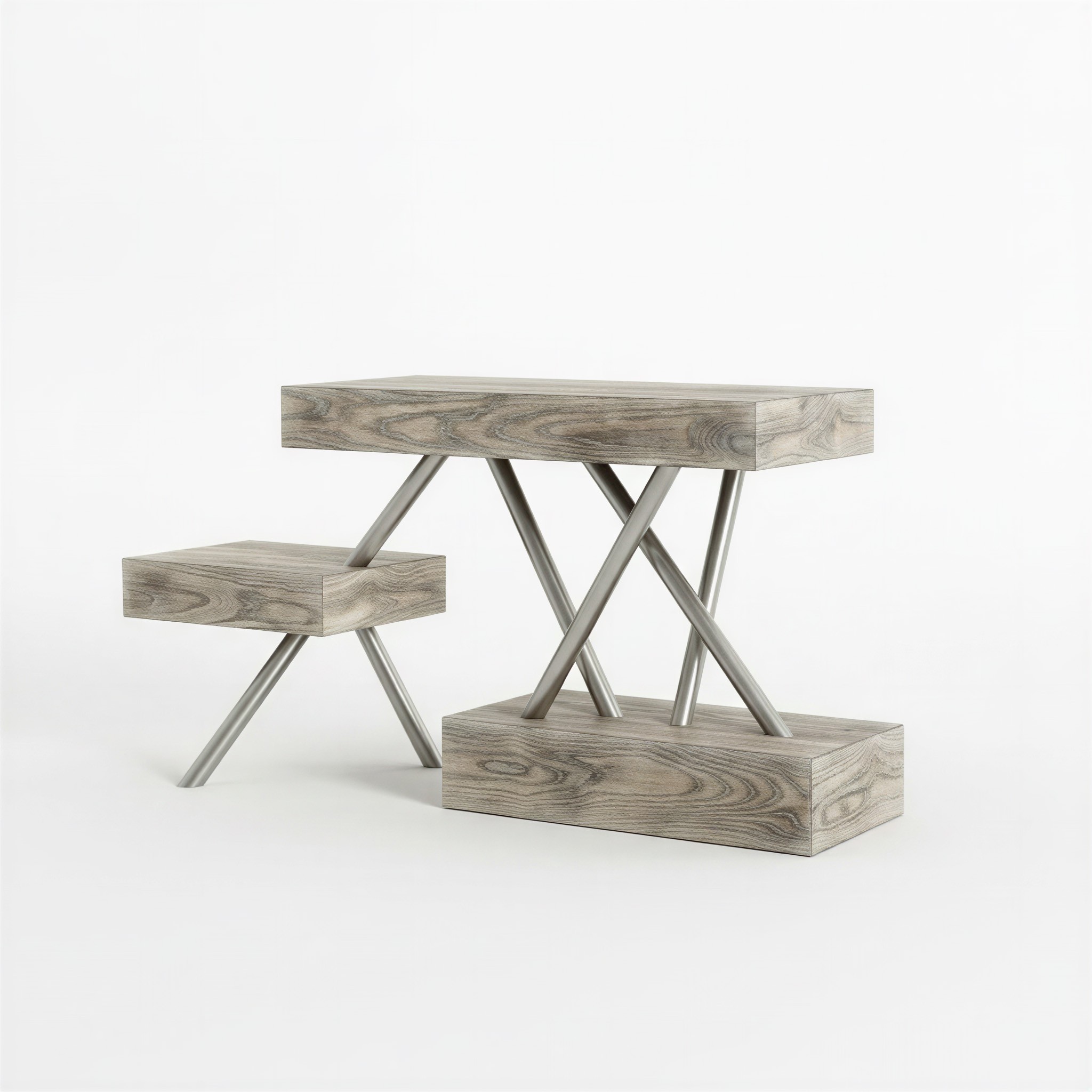
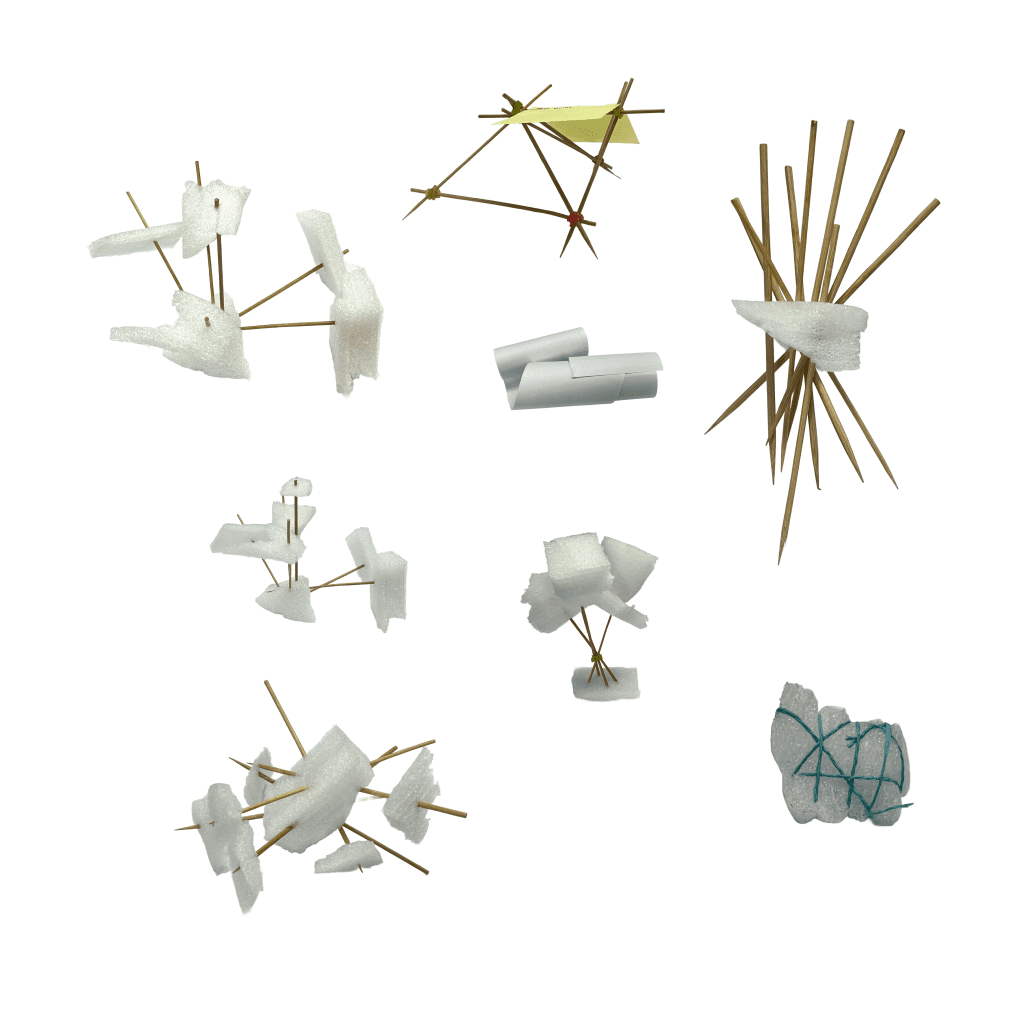
I built The Tipping Point by hand, working through models made from foam and sticks before arriving at the final form. Three walnut boxes rest on angled steel dowels, making the table look less stable than it is.
Context
I wanted to see how far I could push the familiar shape of a table. The starting question was simple: could it still work as a table if it looked like it might fall?
Approach
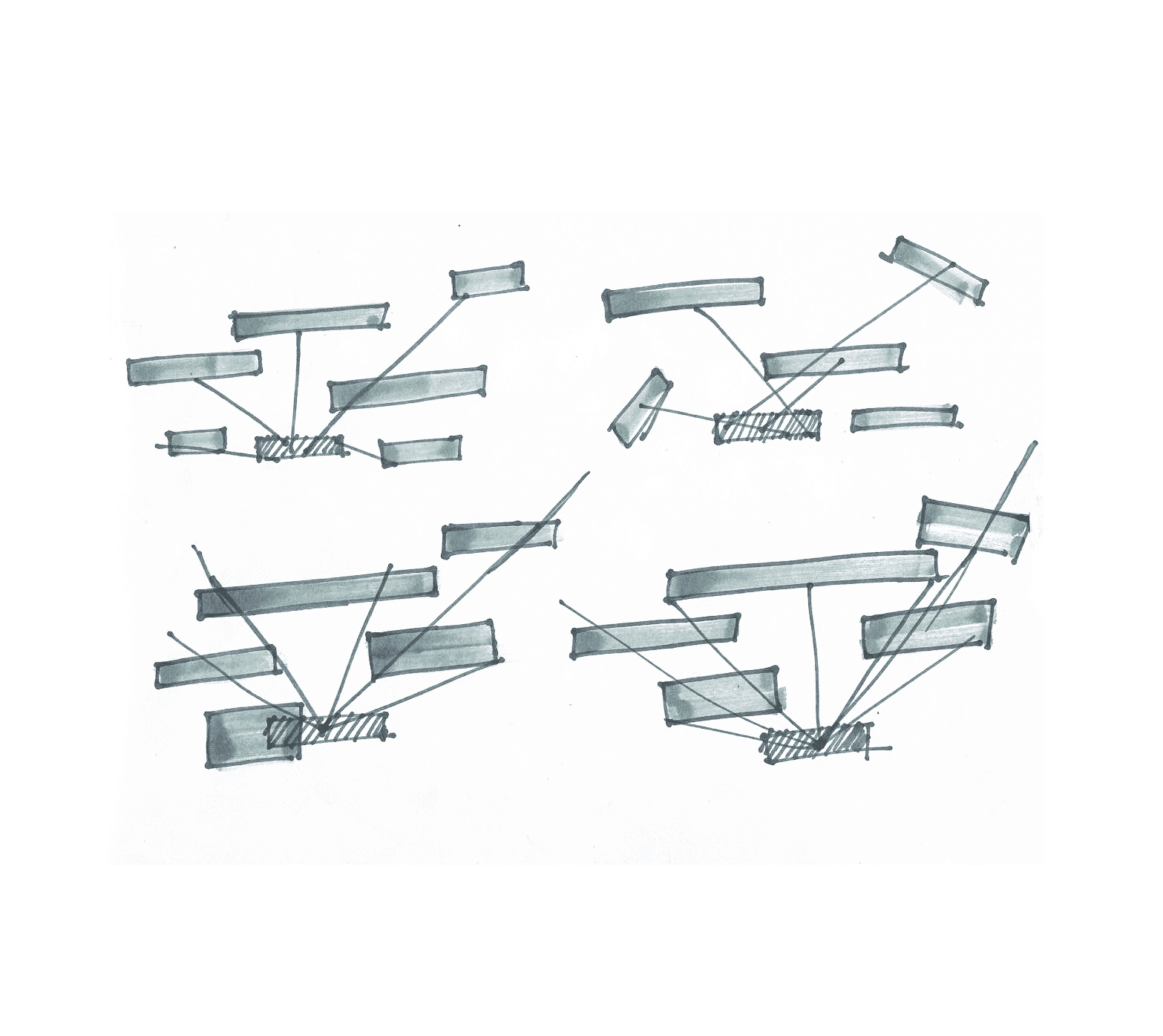
I started in my bedroom with books, rubber bands, toothpicks and even a taco shell. I was looking for ways to hold things above the ground. After weeks of making models from foam and sticks, I settled on three walnut boxes supported by angled 35 mm steel dowels. I built, tested and rebuilt the table by hand.
Outcome
People circled the table, crouched to look underneath and pushed it to test its balance. It stayed upright. That reaction was what I had been working towards: an object that makes people curious enough to investigate it.